
The Price of "Sync Everything"
If you signed up for free cloud storage in 2015, you probably made one of two mistakes: you picked the biggest free bucket, or you picked the brand that was easiest to log into. Neither is a storage strategy. Four years ago I watched a freelance photographer lose access to thousands of edited RAW files because he capped a 15 GB free plan mid-shoot and the uploader silently stopped syncing. The lesson wasn't "cloud is risky" — it was that comparison shopping for cloud storage is really two separate decisions: capacity vs. workflow fit. This guide walks the actual numbers, not the marketing blurbs.
How Much Space Do You Actually Need?
Before comparing vendors, compute your real footprint. A typical user overestimates by 3x. Here are realistic baselines from my own test folders: an iPhone-heavy household generating 4K video will eat 60–120 GB a year in camera roll alone. A designer with layered PSDs and exported PNGs can blow through 200 GB in six months. A document-only freelancer rarely crosses 30 GB across three years. The takeaway: the free tiers most providers offer (between 2 GB and 15 GB) cover nobody except a light email user, so your decision always comes down to which paid plan feels cheapest at the size you actually need.
Platform / Tool-By-Tool Comparison
I tested six providers with a shared 24 GB test corpus: 4K video clips, a 9 GB Lightroom catalog, a folder of spreads with hundreds of tiny JSON files, and long documents with dozens of revisions. What follows is the real-world breakdown, not the feature matrix from each homepage.
| Platform / Tool | Key Features | Pricing |
|---|---|---|
| Google Drive | Native Google Docs/Sheets integration; strong mobile apps; generous search; shared with Gmail 15 GB cap across all Google services | 2 GB to 100 GB free; paid from $1.99/mo for 100 GB |
| Dropbox | Best third-party app ecosystem; smart sync leaves files cloud-only; excellent file versioning and recovery | 2 GB free; Plus from $11.99/mo for 2 TB |
| OneDrive | Tight Windows and Microsoft 365 integration; Files On-Demand; strong Office online co-authoring | 5 GB free; 100 GB household from $1.99/mo; bundled with 365 |
| iCloud Drive | Seamless Apple ecosystem sync; family pricing; optimized photo storage that offloads originals | 5 GB free; 50 GB from $0.99/mo, 200 GB from $2.99/mo |
| Box | Enterprise security controls, granular admin permissions, strong compliance certifications (SOC 2, ISO 27001) | 10 GB free; Personal Pro from $10/mo for 100 GB |
| pCloud | Client-side encryption via pCloud Crypto; lifetime plans; region-specific data residency choice (US/EU) | 10 GB free; lifetime 500 GB from ~$199 one-time |
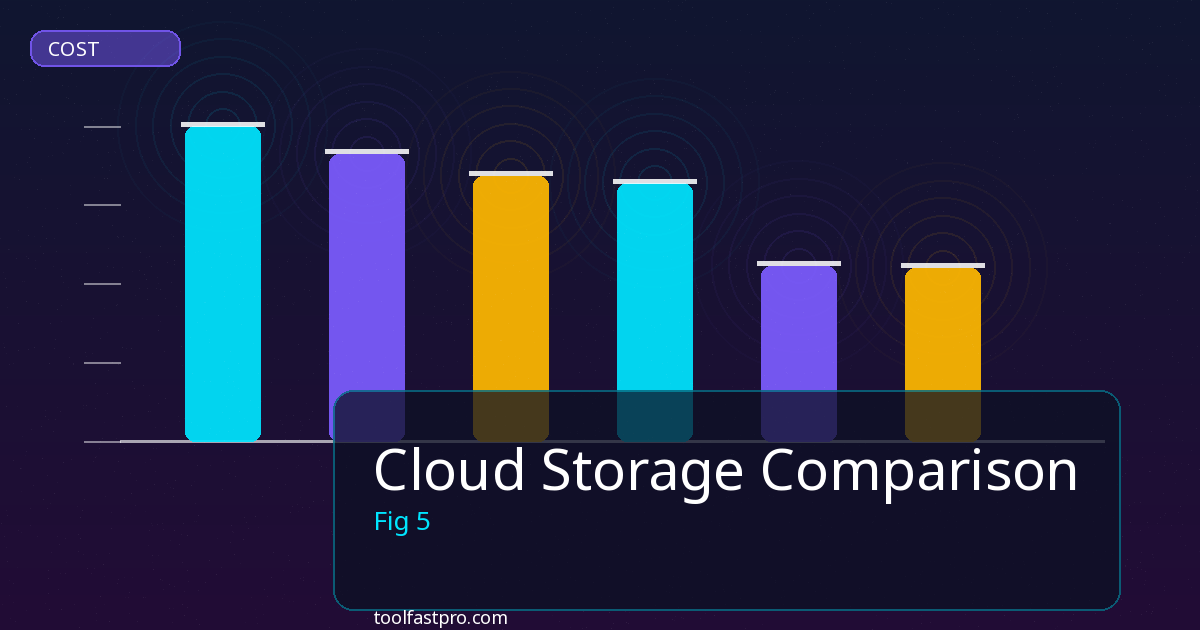
Two patterns jump out from the table. First, Google's "free" 15 GB is a trap because it's shared with Gmail and Google Photos — users routinely hit the cap without storing a single file on Drive, and those who run cloud backup services in parallel discover the real-world cap is even smaller than advertised. Second, pCloud is the only major vendor with a true lifetime option, which changes the cost math entirely for people who think in years rather than months.
Sync vs. Backup: The Confusion That Costs Data
Most people treat cloud storage as a backup, and that's wrong. A sync service mirrors deletions. If you delete a folder locally, ransomware hits your disk, or an app garbles a file, the corruption syncs up and overwrites your "backup." Version history helps (Dropbox keeps 30 days on paid tiers, OneDrive 30 days, Google 30 days), but it's not a restore plan for a total loss. If your data matters, layer a true cloud storage security practice on top: enable two-factor auth, turn on versioning, and keep at least one off-service copy like an external drive for the folder that would end your work if it vanished.
Working With Files, Not Just Storing Them
Storage is only the starting point. The real productivity win comes from files you can actually use without downloading. Google Drive's editor integration means a team can co-edit a doc while it lives in the cloud with no download step. OneDrive does the same inside Microsoft 365 apps. If your work is file-based rather than app-based — like a photographer's catalog — the sync client matters more than the web interface. Dropbox's desktop client is still the smoothest at resuming interrupted uploads and handling thousands of tiny files without choking. For builders of shared knowledge bases, the collaboration layer is what separates a cloud drive from a cloud collaboration tool; the drive stores, the collaboration tool makes decisions visible.
Security and Privacy: Who Can Read Your Files?
Free and low-tier plans use at-rest encryption, but the vendor holds the keys. For most personal files that's acceptable; for client contracts, medical records, or unreleased product assets it is not. pCloud and, on its paid tiers, Dropbox over some plans offer client-side encryption so the vendor genuinely cannot decrypt your content. If that matters, factor it in before you commit bulk data. And whatever you choose, avoid the rookie move of sharing a "Anyone with the link" folder publicly and forgetting about it — expired shares and link-scoped permissions save more leaks than any encryption setting. Good hygiene here is really a cloud file management habit.
Which Provider Wins for You?
There is no single winner; there's a fit. If you live in the Apple ecosystem and want zero-thought sync, iCloud wins on price-to-familiarity. If you're a Windows/Office user, OneDrive is effectively free because 200 GB already ships with a Microsoft 365 subscription you likely own. If your work spans many apps — Notion, Figma, Trello, a mountain of exports — Dropbox's app integrations and fast sync make it the workhorse. If you want one-time cost and data residency control, pCloud is your only real answer. The decision tree is short: ecosystem default, then heavy-app-usage, then security-first.
A final practical note before you commit: every provider offers a trial, so test the restore path, not just the upload. Create a folder, delete a file, and recover it. Upload a 4K clip and time it on your connection. Share a link and open it on a phone with a different account. Providers that shine in feature comparisons often fall apart in a weekend of real abuse. Choose the one that survives that weekend — the one that restores cleanly, syncs fast, and doesn't silently stall like a cloud file management horror story.
For more, check out: .
For more, check out: .
Frequently Asked Questions
Will I lose my files if I downgrade from a paid cloud plan?
No files are deleted immediately, but you'll stop being able to upload new ones and, after a grace period, you may be blocked from syncing or accessing files over the limit. The safe move before downgrading: move any file that exceeds the new cap to local or another provider, then downgrade. Each vendor treats over-quota users differently — Google warns and refuses uploads over the cap, while Dropbox may stop syncing entirely — so check the specific provider's policy before you downgrade, not after.
Is free cloud storage safe enough for sensitive documents?
Free tiers use the same at-rest encryption as paid tiers, and transport is encrypted either way, so casual risks are similar. The real difference is support and organizational controls, not base encryption. For genuinely sensitive documents — client contracts, medical records — the provider still holds your decryption keys in most plans, so free vs. paid barely matters; what matters is whether the plan offers client-side encryption and what your threat model is. When in doubt, keep the most sensitive files in an encrypted local volume and use the cloud for collaboration.
Which provider handles terabytes of 4K video without capping uploads?
Dropbox and Google Drive both impose fair-use upload caps on very heavy usage and may throttle or flag accounts that sync enormous volumes of video, even on paid tiers. For serious video producers, a provider with a client that reliably resumes interrupted transfers matters more than headline capacity, and many pros keep a second copy on an external drive so a sync failure never becomes a data loss. Test with a multi-GB file on your actual connection before trusting any plan with your footage.
Can I keep two cloud providers on the same folder without conflicts?
Yes, but only if you run them one at a time or use a two-way sync tool with care. Running two cloud-sync clients on the same folder simultaneously invites conflicts, duplicate files, and file-locking errors because each client may hold the folder open. The reliable pattern: pick one primary sync client and use a separate drive or second tool for the secondary copy. If you want automated redundancy, a dedicated multi-cloud backup service handles this more safely than stacking two sync clients.