
Three weeks into running my own consultancy, I hit the wall that makes every founder question their life choices: 14 client calls, 2 team meetings, a dentist appointment I forgot, and a deadline I only caught because a client emailed "just checking in." The calendar wasn't broken. The problem was that I was treating it as a passive log instead of an active system. That realization is what separates people who live in their apps from people who merely download them. A smart scheduling app should do more than store events—it should negotiate, buffer, prioritize, and tell you what to cut before you ever feel the overload.
Why a Calendar Is Not a Scheduling System
Most professionals already have a calendar. Google Calendar and Apple Calendar track your commitments, and they're fine at that. But a scheduling app earns the word "smart" only when it starts making judgment calls: booking meeting slots that respect your deep-work hours, automatically leaving travel buffers, or flagging that you've scheduled five calls back-to-back with no lunch. Static calendars capture the past you agreed to. Smart schedulers shape the future you actually want. That distinction matters because the tools below occupy very different points on that spectrum, and choosing wrong means you pay for features you never use or, worse, miss the one feature that would fix your weekly rhythm.
The Scheduling Problems Worth Paying To Solve
Before comparing tools, it helps to name the specific pain points, because every product in this category is really an answer to one of these questions:
- Booking friction: How many emails does it take to find a time that works for both parties? If it's more than one, you're losing money on administration.
- Zone defense over your focus: Can the tool block mornings for deep work and push meetings to the afternoon automatically?
- Timezone math: With distributed teams, a missed timezone conversion is a missed client—and a reputation hit.
- Group coordination: Booking a single teammate is easy; coordinating a four-person team across calendars is where most schedulers break.
- No-show prevention: Reminders and rescheduling rules that cut ghosting are worth more than a polished UI.
Calendly: The Booking-Link Workhorse
Calendly is the default answer for a reason. Its core product—a shareable link that lets others claim a slot from your availability—solved the email-tag problem so completely that the term "Calendly link" is now part of everyday professional vocabulary. The free plan gives you one event type, unlimited one-on-one meetings, and integration with Google, Outlook, and Office 365, which is genuinely enough for a solo freelancer. Paid tiers start around $10 per seat per month, adding unlimited event types, group meetings, and round-robin routing for teams. Where Calendly is weaker is deep customization: conditional availability gets complicated, and the mobile experience, while improved, still trails the desktop. If your need is "stop emailing about times," Calendly is the fastest fix.
Cal.com: The Open-Source Powerhouse
Cal.com is what you get when you want Calendly's model but refuse to be locked into pricing or feature limits. As an open-source project, it offers a genuinely free self-hosted tier, and even the hosted free plan includes unlimited events—a rarity in this space. Paid plans run roughly $20 per month per user and unlock round-robin, workflows, and integrations. The real appeal is extensibility: you can fork the codebase, build custom booking logic, and ship your own branding. The trade-off is setup friction. Self-hosting requires comfort with deployment, and even the hosted version demands more configuration than Calendly's out-of-the-box experience. For technically capable teams who hate per-seat pricing creep, Cal.com is the principled choice.
TidyCal: The Budget Booking Bet
TidyCal is the value play that quietly wins over cost-sensitive users. It's a one-time purchase of roughly $29 (occasionally featured for less), not a subscription—a fundamental difference in how you think about the tool's lifetime cost. It includes unlimited bookings, unlimited calendar links, and integrations with major calendars and payment processors. For a solo operator whose volume doesn't justify a recurring $10–$20 monthly bill, TidyCal reaches break-even within a few months and then keeps saving money every year. Its limitations are real: fewer advanced automation workflows than Calendly, and group/team routing is thin. But if your calendar needs are mostly one-on-one client meetings and you dislike subscriptions on principle, TidyCal deserves a close look.
Reclaim.ai: Scheduling That Protects Your Deep Work
Reclaim.ai answers a different question: not "how do people book me" but "how do I actually get important work done." It sits on top of your calendar and auto-defends time for tasks, habits, and breaks, reshuffling lower-priority events around them. This is where smart scheduling stops being about convenience and starts being about behavior, which is the theme of how careful deep-work scheduling reshapes a week. The free plan grants a limited number of tasks and habits; "Starter" with expanded capabilities starts around $8–$10 per month, and business plans for team scheduling cost more. The catch is that Reclaim works best when you let it take the wheel—if you insist on keeping full manual control, you'll fight it. But for anyone whose calendar fills up with other people's priorities, that loss of control is precisely the point.
Motion: The All-In-One Autopilot
Motion markets itself as an AI project manager that happens to schedule for you. It attempts the hardest job in this category: combining your projects, tasks, and meetings into a single view where everything gets a time block automatically. The ambition is real, and when it works, it feels magical—deadline-aware planning that reflows your day as new work appears. That power comes at a price: Motion is one of the most expensive options at roughly $19–$34 per month depending on the plan, and it has no meaningful free tier beyond a short trial. The learning curve is steep, and users who want a simple booking link will find Motion overwhelming. It's the right tool for busy operators managing many moving parts at once, not for someone who just needs to avoid double-booking.
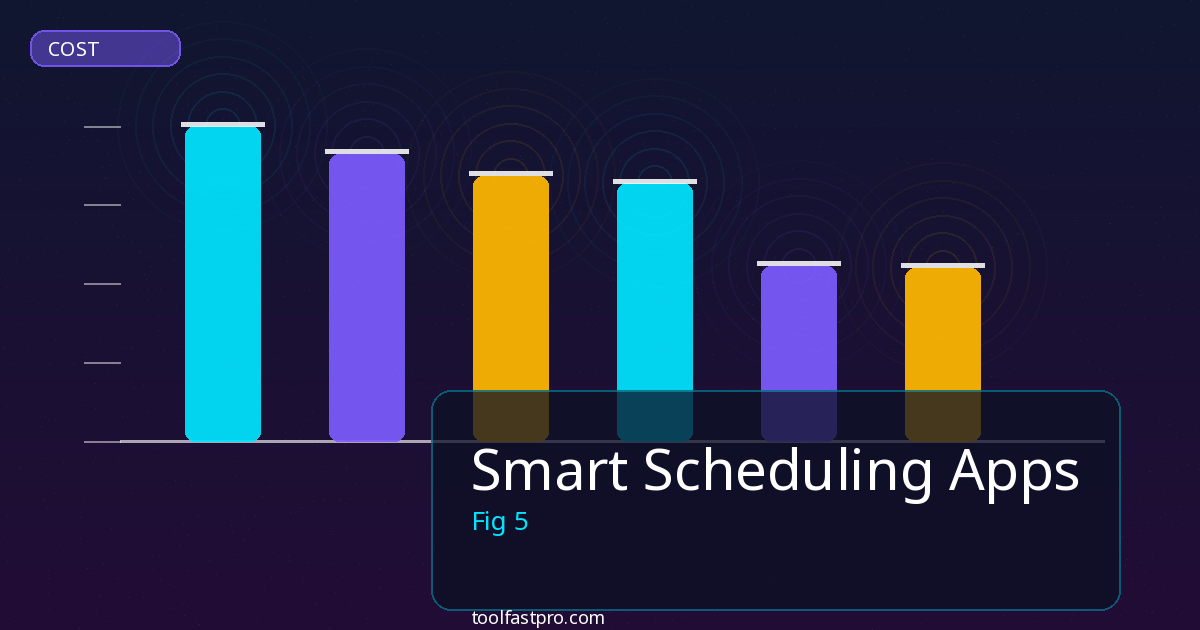
| Platform / Tool | Key Features | Pricing |
|---|---|---|
| Calendly | Booking links, round-robin, group meetings, conditional availability, calendar integrations | Free plan; paid from ~$10/mo per seat |
| Cal.com | Open source, unlimited events, custom workflows, self-hosting, team routing | Free self-host; hosted from ~$20/mo per user |
| TidyCal | Unlimited bookings and links, payment integrations, one-time purchase | ~$29 one-time (no subscription) |
| Reclaim.ai | Auto-defends focused time, habit and task scheduling, smart buffers | Free tier; from ~$8–10/mo |
| Motion | AI project management, auto-scheduling, deadline-aware task planning | ~$19–34/mo; trial only, no free tier |
Choosing Based on How You Actually Lose Time
If the comparison table feels dense, compress it back to your dominant pain point. Are you drowning in booking emails with clients? Calendly or TidyCal solves that today, and TidyCal costs less over time. Are you open to letting software run your focus blocks? Reclaim.ai is the gentlest entry point. Are you managing a team's cross-calendar logistics? Calendly's round-robin or Cal.com's team features serve that better. Are you juggling projects, not just meetings? Motion's autopilot is the most aggressive, and also the most expensive. There is no single right answer—only the answer that matches your workload and your tolerance for handing over control.
A Workflow That Keeps Tooling Light
Whatever you pick, resist the urge to run three schedulers at once. A common pattern that works well is pairing one booking tool (Calendly, Cal.com, or TidyCal) for external availability with one focus-protection layer (Reclaim.ai) for your internal deep-work hours. That two-tool stack covers both directions: letting others in at the right times and keeping your own priorities safe from incursion. The same habit thinking underpins good smart note-taking systems, where capturing intent matters more than the tool itself. And if you are serious about protecting unhackable blocks of concentration, the discipline you build around scheduling is exactly what deep-work scheduling apps are designed to reinforce. Start small, set your availability honestly, and let the tool prove its value for two weeks before you commit to a paid tier.
Pitfalls That Sabotage Smart Scheduling
Even a great tool fails if you feed it bad inputs. Three mistakes recur across almost every onboarding. First, people set availability windows too wide, then wonder why their week collapses—your scheduler can only defend the time you actually declare sacred. Second, teams forget to sync timezone preferences, so a "3 PM" invitation lands on the wrong end of the day for a remote colleague; verify timezone handling before rolling out to a distributed group. Third, users treat the tool as fire-and-forget, never revisiting their availability as projects shift. Treat scheduling configuration as a monthly review, not a one-time setup, and your smart scheduler stays smart instead of quietly going stale.
Signs You Should Consolidate Schedulers
If you maintain a personal Calendly link, a team Cal.com account, and Reclaim.ai on the same calendar, you're juggling too many trust boundaries. The first sign you need consolidation is missed bookings because invitees couldn't figure out which link to use. The second is double-booking across systems that weren't aware of each other. The third is paying for overlapping subscriptions you never fully configure. Pick a primary booking surface, point everything through that one channel, and let the focus-protection layer run underneath. Simpler infrastructure means fewer failure points, and in scheduling—where a single missed slot costs a client—reliability beats feature sprawl.
For more, check out: .
For more, check out: .
FAQ
Can I use a free scheduling app without hitting awkward limits?
Yes, if you choose deliberately. Calendly's free tier covers one event type and unlimited one-on-one meetings, which suits a solo freelancer. Cal.com's free hosted plan includes unlimited events, and its self-hosted option is free forever if you can run it. TidyCal's one-time purchase isn't "free," but it ends up cheaper than a subscription within a year. The catch is usually team features and advanced routing, which sit behind paid tiers, so define whether you need group coordination before committing.
What's the difference between a booking link and AI auto-scheduling?
A booking link (Calendly, TidyCal, Cal.com) shows others your available slots and lets them claim one—it's about reducing the friction of agreeing on a time. AI auto-scheduling (Reclaim.ai, Motion) actively rearranges your existing calendar to protect tasks and priorities, moving lower-value events around them. Many people need both, but they solve different problems and are often combined poorly. Start with whichever pain is louder: inbound booking chaos or your own focus collapse.
How do these tools handle multiple time zones?
Calendly converts all slots to the inviter's timezone by default and displays invitees' local times automatically, which handles most distributed cases cleanly. Cal.com offers granular timezone-aware scheduling, and TidyCal supports timezone conversion for bookings. Reclaim.ai and Motion assume you'll use them on your own calendar, so timezone handling there is more about the underlying calendar than the scheduling logic. If you regularly work across zones, test the tool's timezone UX with a fake invite before relying on it.
Will these tools prevent double-bookings automatically?
Yes, for bookings routed through the same link. Calendly, Cal.com, and TidyCal all reserve the slot the moment someone books it, removing it from your availability. Problems arise when you mix schedulers or accept walk-in bookings manually without updating the calendar—two systems that don't talk to each other can't see each other's commitments. That's why consolidating to one primary booking link matters: your availability should be a single source of truth.
Is Motion worth its high price for a small business?
Only if your bottleneck is juggling many simultaneous projects. Motion's value comes from deadline-aware auto-scheduling, so it pays off for someone running multiple deliverables with hard deadlines. If your work is mostly client meetings and recurring tasks, the cheaper Reclaim.ai or even a basic booking tool delivers most of the benefit for a fraction of the cost. Trial Motion during a genuinely busy period, not a quiet week, or you'll underestimate what it can do.
Can I keep using Google Calendar with these schedulers?
Absolutely—most of them are enhancements that sit on top of Google Calendar and Apple Calendar rather than replacements. Calendly and Cal.com sync your availability to them, Reclaim.ai writes its defended blocks into them, and Motion manages your calendar as one integrated view. You keep Google Calendar as your system of record and layer the scheduling logic on top, which is usually the cleanest architecture for staying flexible.