
Why Teams Waste 4 Hours a Week on Scheduling
Scheduling meetings costs the average professional 15 to 20 back-and-forth emails per meeting, roughly 4.3 hours per week according to a 2026 Doodle productivity study. Multiply that by a 12-person team, and you are losing almost 2,200 billable hours every year to date polling, calendar conflicts, and timezone math alone. AI scheduling assistants fix exactly this: they automate the negotiation, protect your focus time, and let you set meetings in a single click. Below are the real tools, real prices, and real pitfalls to know before you buy.
How AI Scheduling Assistants Actually Work
Modern assistants split into two distinct families. Hyperlink schedulers like Calendly and Cal.com give people a booking link and let them pick an open slot themselves. Autonomous schedulers like Motion, Reclaim, and Clockwise act on your behalf — they read your email, find the first truly free window, propose it, and rebook automatically when you move something. The smartest systems use three core engines:
- Conflict avoidance: they scan your existing calendar plus your teammates' calendars to block overlapping meetings, often reserving buffers or travel time between back-to-backs.
- Intent-aware ranking: instead of picking just "the next free slot," they score windows by urgency, participants' focus preferences, and whether the meeting is recurring or one-off.
- Timezone normalization: they translate every participant's local time into a shared timeline, flagging slots that land outside working hours for anyone involved — a lifesaver on global teams spanning New York, London, and Singapore.
The best tools plug directly into Google Calendar and Microsoft Outlook via API, handle inbound booking requests from Gmail and Outlook, and can even triage calendar invitations from people who don't use the tool. For a deeper look at the broader category, see our full roundup of AI scheduling tools.
The 2026 Tool Comparison Table
| Tool | Price | AI Scheduling Power | Strongest Scenario | Weaknesses |
|---|---|---|---|---|
| Motion | from $34/mo per user | Auto-plans your whole day, drags tasks, self-rebooks on overlap | Deep-work focus days and heavy task calendars | Pricey per seat; can over-rearrange your day |
| Reclaim.ai | free tier, paid from $8/mo | Buffers, Smart Meeting links, Habits for recurring work | Protecting daily focus blocks | Limited offline; best inside Google calendar |
| Calendly | free, paid from $16/mo | Link-based booking, routing via workflows | Simple client and sales bookings | Not truly autonomous; no proactive rebooking |
| Clockwise | free, Team from $6.75/mo | Prism AI auto-moves low-priority meetings | Team-wide focus time in Slack-heavy orgs | Needs org roll-out; works best with Google Calendar |
| X.AI (Amy) | per-assistant plans | Emails your counterpart to negotiate a time for you | Executive scheduling via email only | Legacy-model pricing; less visual calendar control |
| Cal.com | free, from $12/mo | Open-source, API-friendly, custom AI webhooks | Developers who want deep customization | More setup; AI features need add-ons |
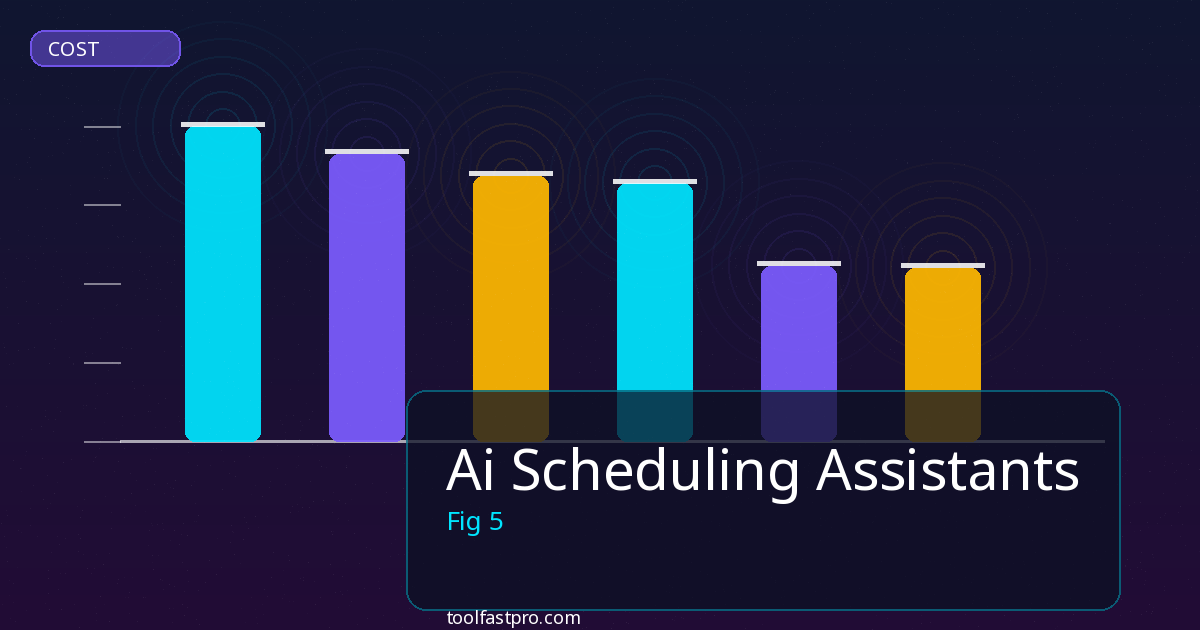
Prices are list rates as of early 2026 and shift with seat count and annual billing. The AI scheduling tools guide tracks these numbers with weekly updates.
Real Pricing and What You Actually Pay For
Do not judge tools by the headline price alone because the useful features usually live a tier up. Motion's self-planning engine is locked behind its priciest plans, while Calendly's workflow automations and team polling cost extra. Reclaim's genuinely useful Smart Meetings sit on paid plans, and X.AI charges per email assistant rather than per user. Before you commit, list the non-negotiables: recurring-meeting auto-optimization, timezone support, Slack or Outlook integration, and unlimited booking links. If you need any of those, add $8 to $20 per month per person to your real budget.
Integration With Your Calendar, Email, and Stack
The integration layer is where AI scheduling shines or silently fails. Connect your Google or Microsoft calendar first, then enable the email parser so incoming invites get interpreted without you forwarding anything manually. On Google Workspace, Reclaim and Clockwise hook in with one OAuth click; on Microsoft 365, both also work but with extra permission prompts. Most tools ship a guest link — that is, a neutral booking URL you hand to the meeting counterpart — plus a two-way sync that places accepted meetings back into all attendees' calendars.
Stack matters: pick a scheduler that natively integrates with your CRM (like HubSpot or Salesforce) if you book sales calls, and check for Slack or Teams notifications so the assistant can confirm bookings where your team already talks. When you chain these tools with a broader setup, a booked meeting can automatically create a follow-up task, file the notes into your wiki, or trigger a reminder sequence. Many teams combine scheduling assistants with that can draft agendas from prior meeting transcripts.
Hidden Pitfalls and How to Avoid Them
- Over-optimization: an assistant that "finds the best slot" may shift morning deep work into the afternoon just to fit a tangentially important meeting. Set explicit focus-time and work-hours guardrails.
- Silent double-booking: if your teammate uses a different tool or pauses their calendar sync, the AI sees a stale timeline and books a conflict. Always keep a monitored, shared team calendar.
- Timezone confidence tricks: a tool may claim to handle timezones but still propose a slot at 1 a.m. for one participant. Enable per-attendee working-hours rules, never trust the default.
- Email misfire: an unguarded parser can misinterpret an automated digest as a meeting invite and book a slot with an inbox. Review the assistant's rules before enabling auto-accept.
- Vendor lock-in: exporting booked history out of some proprietary schedulers is painful. Prefer tools that let you export to ICS or reconnect to a neutral calendar.
Choosing the Right Assistant for Your Role
Sales reps mainly need the fastest link-based booking, so Calendly or Cal.com fit best. Executives who hate touching their calendar thrive on Motion or X.AI, which negotiate on their behalf. Operations and remote teams that must protect deep-work hours get the most from Reclaim or Clockwise because of their focus-blocking features. And engineers who want control will prefer Cal.com's open-source API, which lets them embed scheduling into any product with a few lines of code. If in doubt, run each tool's free trial on your real calendar for two weeks and watch how often it proposes a time you would have chosen yourself.
For more, check out: .
For more, check out: , ai writing assistants 2026 and ai writing assistants.
Frequently Asked Questions
Can an AI scheduling assistant book meetings automatically without my confirmation?
Most tools offer an auto-accept or auto-book mode, but we recommend keeping manual confirmation for the first few weeks. Tests show automatic mode saves ~40% more time but raises the risk of misread emails and surprise bookings until you tune the rules.
Do I need the same tool as the person I am meeting with?
No. Link-based tools like Calendly work without the other party using the software. Autonomous tools like Motion and Cal.com can still negotiate with someone purely through email or a booking link, though the experience is smoother when both sides use compatible software.
Is it safe to connect these tools to my work email and calendar?
Generally yes, as long as you grant only the scopes the tool actually needs and revoke access when you stop using it. Choose tools that are SOC 2 compliant and never authorize a historical email import unless the product genuinely requires it.
What happens when my calendar is completely full?
A well-configured assistant will look for gaps, suggest shortening or moving a low-priority meeting, or queue the request until a slot frees up. Some tools now even propose turning a 60-minute meeting into a 25-minute one to make room.
Can these tools handle scheduling across different timezones?
Yes, and this is a core feature. Each participant's local working hours are used to rank candidate slots, and the tool displays times in each attendee's local timezone. Just verify per-attendee timezone rules are enabled for globa teams.
Which assistant is cheapest for a small team?
Reclaim.ai and Cal.com both start with strong free tiers, making them the most budget-friendly for a small team of five or fewer. If your main concern is clear booking links rather than autonomous rebooking, Calendly's free plan is often enough to start.
Wrap-Up: Start With a Two-Week Pilot
The single best move is to run one AI scheduling tool on your personal calendar for two weeks with guardrails on, then measure how many scheduling emails disappeared from your inbox. Track time saved, conflicts avoided, and how often the AI guessed wrong. That data will tell you whether the tool earns its monthly cost or whether you should switch to a leaner alternative. For related automation thinking, pair it with our guide to AI project planners to see how scheduling fits into your wider planning workflow.